Monday, April 10, 2023

Executing Death


Father Paul is the sort of priest people gather around when he speaks.  Part of this may be his British accent, hearkening back to his place of birth.  This means he sounds smarter than everyone else in the room every time he speaks.  Part of it is he is a seasoned homilist, able to distill complex theological thoughts into easily understandable statements.  And part of it is, well, we love him and enjoy listening to him speak.

I think most of it, though, is that he tends to see the obvious things about Orthodox theology that are easy for most of us to miss.  Such was the case this past Sunday, Palm Sunday for us in the Eastern Church.  

The homily was really amazing from top to bottom. The topic, of course, was our Lord's entrance into Jerusalem, where He will, this coming Friday (liturgically speaking), meet His death.  Father Paul dealt with the abandonment of Christ on the cross, by the same followers that were cheering Him as He entered the city.  He dealt with the palm branches as symbols of victory, and how those waving them had no idea what sort of victory that entailed.  But there was one thing he said that really struck me.  He said that Jesus' entrance into Jerusalem would not end in the execution of some barbarian king, as was common in ancient Rome, but "in the execution of death itself."

The Christian life is so easy to distill into the wrong sorts of quips and pithy sayings.  "Jesus loves me."  Well, sure.  He loves those who are not united to Him as well.  Or "God loves you and has a wonderful plan for your life."  That one is a bit more dangerous.  He loved the martyrs too.  He loves those stricken with illness or injury too.  He loves the poor, certainly as much as any.  He loves the imprisoned.  God is not a self-help director.  God loving you is no guarantee that you will not suffer.  In fact, for the Christian, quite the opposite.  It is often in our suffering that we most vividly meet Christ, as He warned us would be the case.

Which brings us to this beautiful statement: Christ entered Jerusalem to "execute death itself"  

That one says a mouthful.  And in so few words.  Christ did not come to end our suffering, but to enter it, and by so doing, end the hold that death and suffering would otherwise have over us.  It isn't that it is such an original thought.  The Church, as you will see below, sings about it quite a lot.  But I certainly have never articulated it in word or thought as neatly as that.  The Christian suffers.  The Christian mourns.  The Christian doubts.  But the Christian has hope.  Because Christ has gone to the tomb before us to pave the way to eternity.  Death to the Orthodox Christian is not the end.  It is not even a new beginning.  It is a transformation, for Christ has transformed death.  Death cannot hold the author of life.  And so He entered it, and as the Resurrectional Troparion in Tone 7 reminds us, "shattered" it.  

Thou didst shatter death by Thy cross, Thou hast opened paradise to the thief!  Thou didst turn the sadness of the myrhhbearing women into joy!

Death is no longer what it was.  It is now something new, a passage into eternity that is welcomed by the Christian.  Not something to be sought after in a nihilistic or suicidal fashion, but neither something to fear and avoid at all costs.  Death is our eternal rest.  And we rest in the arms of a God Who, as Father Paul reminded us at the close of his homily, and as the Church reminds us at every dismissal "is good and loves mankind."  It is that statement, obviously, that inspired the title of this blog way back in 2010.

Similarly, in the Paschal Canon, we sing:

Thou didst descend into the deepest parts of the earth, 
and didst shatter the ever-lasting bars that held fast those that were fettered, O Christ. 
And on the third day, like Jonah from the sea monster, Thou didst arise from the grave.

Death is shattered.  It could not hold the author of life, and it can no longer hold us.  And in a few short days, the Church will sing "Christ is risen from the dead, trampling down death by death, and upon those in the tombs bestowing life!"  This is the Gospel, distilled into the shortest of sentences.  In a few short days, Christ will take up His cross, and execute death itself.  Glory to God.

Saturday, March 25, 2023

To my single Orthodox friends.....it's okay......


There seems to be a lot of discussion on the internet recently about "marriage or monasticism."  Some of this is healthy and good, and some of it is destructive and dangerous.  In particular, the rigorist approach that suggests there are only these two paths to salvation is, in my opinion, anachronistic, narrow and wrong. This post, I pray, will detail the short version of why that is.

First, let us be clear, monasticism and marriage are two paths to salvation that are specifically and liturgically blessed by the Church.  That much is true.  One might say they are the norms.  That is, what we tend to expect is that those who have no plans to get married because they have chosen not to be married should probably, and normally, seek out a monastic community.  So far, so good.

The reasons for this are multitude, but briefly include the idea that we are to seek out our salvation in community with others, learning to give to others of ourselves.  Marriage in this sense is neither a sex-based nor power-based institution as it perhaps was in medieval times, but a true martyrdom where we die to our spouse every day of our lives.  In a monastery, the brothers do the same to each other, and obviously a monastic community thrives neither on sex nor power.  So there are some obvious parallels.  And a person who is open to neither marriage nor monastic life may have legitimate spiritual issues that raise concerns and ought to be addressed. 

It is also true that the so-called "single life" is not something that was known in Christian antiquity, or even until recently.  So searching the Fathers for quotes on how to be a chaste single person is not as likely to bear fruit as quote mining them for thoughts on monasticism versus marriage.  That is not to say the Scriptures do not speak of this, because monasticism was unknown to the Apostles, and yet St. Paul has much to say about the celibate life.  The point is, a person who is single and not open to marriage, and also single and not open to a monastic life, may struggle with selfishness, self-centeredness, inability to give of himself to others, etc.  

The key word in both of these statements above is "may."  Because as we know, there are those who are open to marriage, but simply waiting for God to present them a proper spouse.  There are those who are open to marriage who, for various reasons, may struggle to find a partner.  And there are those who fall into other categories for whom marriage may be undesirable at present or unlikely for whatever reason.  That does not mean those people should become monastics, and it certainly does not mean they must become monastics.

Despite this, of late, I have seen multiple internet personalities (I will not name them because I do not wish to draw attention to what I think is their error), who suggest that marriage and monasticism are not merely two paths to salvation blessed by the Church, but in fact they are the only paths blessed by the Church, such that unmarried, non-monastics must be seeking to either get married or join a monastery.  It is my opinion that this is a flawed understanding of the history of the Church, the Holy Scriptures, the writings of the Fathers and the Orthodox life.

As a matter of history, monasticism developed in the late 3rd century.  It grew out of the peasant class and was based on a desire to separate from society.  The movement was concerning to bishops, who felt it threatened the unity of the Church; however, over time a greater appreciation for monasticism began to develop as the bishops witnessed the fruits of this life.  Early monasticism was eremitic (the word "monastic" derives from the Greek word μόναρχος, meaning "solitary."  That is, early monastics were not living in monastic communities, but were hermits.  So right away we can see that this notion that one must be married or monastic because salvation requires community ignores the very history of monasticism itself.  St. Anthony of Egypt went into solitude in the desert, and came out able to heal and reconcile enemies, which showed forth the fruits of his solitary engagement in the spiritual warfare.  Around the same time, cenobitic monasticism began to develop.  When people say "there are two paths," they typically mean marriage versus cenobitic monasticism.  They do not typically mean wandering off into the desert without a tonsure, as St. Anthony did (or as St. Mary of Egypt, as another example, did).  So the attempt to limit the Christian life to these two narrow forms is historically flawed.

Moreover, as noted, monasticism developed in the late 3rd century.  This means for more than a quarter millennium, there was no Christian monasticism.  There were earlier Christian ascetics, but none who lived a formal monastic life, either eremitic or cenobitic.  There was an actual order of widows in the early Church, but they did not live as a monastic community as we think of today.  There were almost certainly unmarried Christians who were not widows. What to make of this?  Well, for starters, unless we are willing to say those people are damned because God had not yet created the monastic life, we must assume there is at least one other path to salvation.  So it is hard to suggest that monasticism is required by our God, but for nearly 300 years He hid that path from His people so that those who preceded the advent of monasticism are outside salvation.

Perhaps the biggest problem with this approach, however, is that not all are called to the monastic life, and you do not discern that calling merely in opposition to marriage.  That is, just because you are not married, and not likely to become married, does not mean you have been called to live out your days in a monastery.  For one, nobody is entitled to live in a monastery.  One must be blessed by the Abbot or Abbess, and one must be received.  One who joins a monastery and is deemed unfit for monastic life may be asked to leave.  So what are people who are unable to find a marriage partner and also unable to find a monastery that will have them to do?  

I hope I have made clear above, I have no issue whatsoever with marriage (I am, after all, married) or monasticism.  I do think it is worth noting that this notion that there are only two paths, and that single Orthodox Christians who are open to marriage but for whatever reason find it unlikely they will find a spouse must rush off to be tonsured or lower their standards drastically to find a spouse, is nonsense.  If you are Orthodox and single, it's okay.  If you want to join a monastery, you should.  But you don't have to, nor do you have to rush into marriage simply to "pick a path."  There are two paths that are liturgically blessed, but those who are not on a liturgically blessed path are still on a path to salvation.  Please don't let anyone tell you otherwise.

Wednesday, March 22, 2023

Standing in the Light


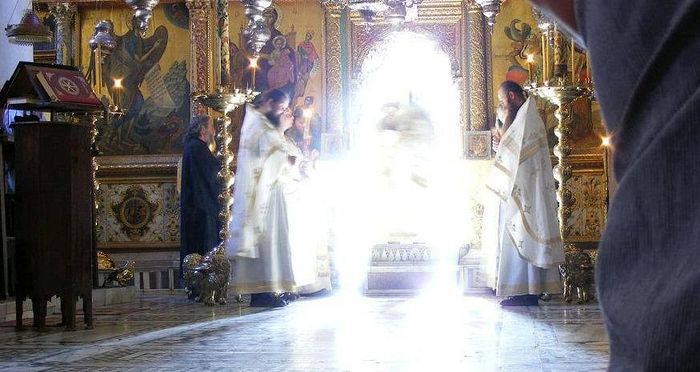
In the Orthodox Church, we speak a lot about "light."  We refer to those received into the Church as having been "illumined" in baptism and/or chrismation.  We sing about the "Gladsome Light" during the Vespers service.  During the Presanctified Liturgy during Great Lent the priest intones "the light of Christ illumines all," and at Pascha we sing "come ye, take light, that is never overtaken by night, glorify the Christ, risen from the dead."  Monastics speak a lot about the "uncreated light," which we and they long to experience.

The significance of this light is sometimes misunderstood, both within and without the Church.  When we stand in the light of Christ, we are illumined, this is true.  But what does that illumination achieve?  Why is it that the saints, on their deathbeds, so often pray for more time to repent.  And like the goats, their faithful followers ask "what do you have to repent of?"  And the saints so often respond, "I have not yet begun to repent."  Why do those closest to God become so utterly aware of their own unworthiness and frailty, and seemingly unaware of their own glorification?

I would submit that it is because when we say "the light of Christ illumines all," as a dear friend once said, we begin to see ourselves for who we really are.  That is, the light of Christ illumines us in the same way we are illumined in His eyes.  We see all of the things we hide away from the world.  We see how very dark and sinful we really are.  And it is because of that illumination that we can begin to heal, as He would have us healed.  Remembrance of sin is prolific in the Fathers.  St. John Climacus devotes large portions of The Ladder to discussing it.  The Prayer of St. Ephraim, which we pray at pretty much every Lenten service, is along these lines as well.  "Grant me to see my own sin, and not to judge my brother . . . ."  This is not to say that we should sulk around mourning our sins all the time and be joyless self-scolds or, worse, bask in a prideful false humility.  It is to say that a proper Orthodox outlook on standing in the light of Christ is one of mortification, not glorification.  We are not to bathe in this light as if it speaks anything good of us.  Rather, we are to show it forth as we see our own sin clearly and learn to show humility and deference and temperance and forgiveness toward all others, who are sinners, yes, but no worse than we are.  The light does not belong to us.  It is not of us.  It is ours only in the sense it is given to us by Him in Whose possession it properly resides.  And so we have no right to claim it as ours, and pridefully stand in it as if we have no sin.

We fail at this, obviously.  Yet we struggle, because in the end, to stand in the light means being willing to face our own iniquities and renounce our own pride and embrace the virtues of selflessness, humility and meekness.  Being illumined is not being set above.  It is, in a very real sense, becoming truly self-aware, truly human, and learning slowly to take on the light of Him Who gives it, and in that way, learning to view humanity as He does, with perfect love, submission, and self-sacrifice.  The light does not show us forth as we would like to be seen.  It shows us forth as we really are.  That we might see our own sin and not judge our brother.

Saturday, March 18, 2023

Encountering God


I've had a lot of thoughts lately about Orthodox distinctives, and what qualifies as such, and what such distinctives are foundationally Orthodox versus what distinctives qualify more as theologoumena or pious opinion.  And in terms of Orthodox distinctives, I think one that escapes most people, including certain Orthodox Christians, is the idea that in Orthodox Christianity, we are not merely trying to do the right things to get reward or avoid punishment.  Rather, the point of the Orthodox Christian life is to encounter God.

I suppose in some sense every Christian could say this.  After all, if you believe God forgives your transgressions for the sake of His Son, and this is the goal of the Christian life, to receive that forgiveness, in a sense you have "encountered God."  And obviously, more sacramental communions (Lutherans, Anglicans and, obviously, Catholics) have a more tangible understanding of encountering God, even if all they believe they receive from the sacraments is forgiveness through some direct or indirect connection with God.  But that is not what we mean in the Orthodox Church. 

As Orthodox Christians, when we receive any sacrament, and in fact in the Sacramental Life (which is not limited to a strict numbering of sacraments), we believe God works in and through us.  For the Orthodox Christian, grace is not, as some of our Protestant friends suggest, merely "God's unmerited favor." Part of this is, for us, merit doesn't really enter into the equation formally.  Rather, for us, grace is the operation of the Holy Spirit in the life of the Christian. We receive this first and foremost in our baptism, then we receive the seal of the gift of the Holy Spirit in chrismation, then we receive God's Divine Energies through His Body and Blood in the Eucharist.  The Eucharist is the central act of the Christian Church for this reason -- it is the Sacrament to which the others point.  We are baptized so that we might be chrismated, and chrismated so that we might commune.  We are married so that we might receive the Eucharist together, strengthening the bonds of love between us.  We are ordained so that we might assist in serving or even ourselves serve the Eucharist.  We are given repentance that we might return to the Eucharist.  And we are given Holy Unction that we might be restored to full bodily and spiritual health, that we might receive the Eucharist to the greatest benefit.  This is the point of the Christian life.  All else leads us to this moment where we receive Christ's own immaculate Body, and His own precious Blood.  This encounter with God is tangible.  It is real.  And it is powerful.

This is why mere Christian ideologies are so vapid and empty.  What we believe about God is not nearly as important as how we encounter Him.  That is not to say what we believe about God is unimportant.  Only that our beliefs about God ought to point us to union with Christ, Who is God for us.  God with us.  God in us.  Belief about God that does not lead to an encounter with God is a belief that cannot save.  The Orthodox Church is not an ideology, or a set of beliefs about the Holy Trinity.  The Orthodox Church is a pathway to encounter the Holy Trinity.  More, belief in an intellectual sense does not really capture what the Church means by "faith."  Faith, in a Christian sense, is more akin to trust, as a child trusts his parent.  It is not merely saying the words, or even believing them truly, really in your heart.  Rather, it is clinging to the object of faith.  Faith is not something we do, or even something we try to attain.  Faith is something we live by, trusting in the Creator, the promise-giver, the life-giver.  This is true even when our faith is shaken.  As I've said here before, I don't trust me.  I trust Christ.

This is why efforts to narrow the Orthodox faith to a particular set of beliefs, especially in those areas where the Church has not dogmatized those beliefs, is doomed to fail. It isn't just that those beliefs are not exclusive or required or dogmatized.  It's that belief itself is not salvific.  Faith is, but belief is not.  What you believe cannot save you.  But trusting in the One Who saves?  That is where salvation lies.  And while this trust requires a certain set of beliefs, that requirement is not found in the particularities of Orthodox little "t" tradition.  It is found in the Scriptures and the Ecumenical Councils and the big "T" Holy Tradition of the Church, and not beyond those.  

This is not to say that pious opinions are invalid or improper.  It is only to say they are no more than what the word suggests -- opinions.  Orthodox Christians are free to believe them or reject them.  Orthodoxy is not found in the tightening of the noose around the neck of believers.  The faith is not a yoke.  The Orthodox faith is trusting in the One Who removes the yoke, freeing us from all worldly opinion and imprisonment.  Belief doesn't save.  Christ does.  We believe in Him, not in our own believing.  And we believe in Him, that we might encounter Him.

Wednesday, March 15, 2023

Fear and Self-Righteousness

Something occurred to me today while having lunch with a friend.  Christian rigorists tend to have two things in common.  First, a desire to be set apart from others, which inevitably tends to lead to self-righteousness.  Second, operating predominately from a position of fear.  

As to the first of these observations, at least in my own experience, those who embrace theological rigorism tend to have a very inflated view of their own group, at least those who are sufficiently rigorist as they are, and a very low view of those outside their group, and often even those within their group who they view as insufficiently serious or devoted or correct.  It seems to me that this stems from a Pharisaical desire for certainty, which will be discussed more below, and the remedy for this desire is to ensure that one's self is set apart, distinguished, separated from those for whom such certainty is absent.  This, it seems to me, has the commensurate effect of leading the rigorist to believe he is more righteous than he really is.  The desire to define Orthodoxy not by what we believe, nor even apophatically by what we cannot know, but predominately in opposition to others we deem to be inadequate, ends up putting us in the place of judgement over our brother's perceived failings.  And as we know, judgment stems from pride, and pride is mother of all the passions.  So rather than ending up in a place that authentically satisfies the rigorist's desire for certainty, we end up in a place that has us committing the greater sin in order to separate ourselves from those who would never judge us in return.  Such self-righteousness damages not only our neighbor and the Church, it also damages us.

As to the second observation, it seems to me that this desire for certainty stems from a position of fear before God.  Not the healthy fear of God that every Christian should have, but rather a fear-centered Christian life that results from a misunderstanding of Who God is and how God relates to His creation.  The Pharisees were not unholy people, at least to the extent externals allow one to claim to be holy.  The Pharisees, to the contrary, were the most holy people in terms of law keeping and rule keeping.  The Pharisees did not simply build a fence, but like Eve in the Garden, built a fence around the fence.  They were not satisfied with "do not eat of the fruit."  No, they had to go a step further -- "do not eat of the fruit, nor touch it."  In this way, their fear of punishment was allayed by the certainty that they had kept the rules, because the rules they kept were stricter than those God had given them.  Our Lord had harsh words for them.  They kept the Law, often perfectly, as far as anyone observing could tell.  But God said "I desire mercy, not sacrifice."  And thus they did not keep the Law in their hearts.  Instead, they wielded the Law as a sword against their neighbor, and even against their Savior.

This approach does not produce mature Christians.  If I tell you you must do this thing or else, then you will do only the minimum required to assuage me and no more.  That is, you will do only that which is needed to get "past the post" and avoid the punishment.  Even if the rules are made by setting fences around fences, as the Pharisees did, you still will not do more than required to stay on the correct side of the second fence.  Because your goal is not to seek the good, but rather to avoid the punishment.  As a former pastor once told me, "those who live by the Law are always looking for loopholes."  This is not a proper Christian outlook toward God.  God does not desire us to obey rules to avoid punishment.  He does not desire to punish us at all.  God desires that we enter into His life, encounter Him, and find Him in our neighbor.  That is not to say rules are unimportant, or canons ought to be disregarded, or that prayer and fasting disciplines are bad in and of themselves.  None of those things is true. Rather, we keep the Law because it is good for us to do so.  We forgive because it is good for us.  We pray and fast because those things are good for us.  We follow the canons because the Church has put them in place for our benefit. But that obedience, that desire to do good and follow the rules, must come first from a place of love and trust in the One Who gave them to us to begin with.  We obey because He is good, and just, and merciful, as the Psalmist said, "I follow the thing that good is."  We love because He first loved us.

The Christian lives to encounter God.  God is not found in fear and despair, nor in self-glorification and self-righteousness.  God is found first and foremost on the cross, and through the cross, we find God in our neighbor and our selves.  And so we pray not because we fear God will abandon us if we do not, but rather because we desire to encounter Him.  We fast and attend services and do good not to avoid His punishment, but to live in His glory.  God forgives.  He does not need us to keep His rules for His benefit.  We need to keep them simply because they are good.  Not because the end is worth the means, but because the means are an end in themselves.  

Friday, January 6, 2023

Holy Theophany


Holy Theophany is a celebration somewhat unique to the Eastern Church.  Some Western churches do celebrate it in conjunction with Epiphany (also on January 6), but others do not.  The distinction among us comes from the emphasis placed on the baptism of our Lord.

Epiphany is a Greek word meaning "to manifest" or "to appear."  Usually, in the Western traditions, it celebrates the visitation of the Magi in addition to the baptism of Christ.  In the East, however, it is bound up in Christ's baptism, which is why it is called "Theophany," meaning "appearance of God."  

At Christ's baptism, the first earthly manifestation of the entire Trinity was revealed.  As the Troparion of Theophany tells us:

O Christ our God, when Thou was baptized in the river Jordan

Worship of the Trinity was revealed

For the voice of the Father came forth to testify and name Thee His beloved Son

And the Spirit in the form of a dove, confirmed the truth of His Word

Wherefore, O Thou Who didst appear, and didst enlighten the world, Glory to Thee

The baptism of Christ has deep meaning for Christians.  First, He bowed His head to receive from John the Forerunner, His unworthy servant, the baptism of remission of sins.  Christ took on our sin so that we might take on His righteousness.  Second, in doing so, He cleansed the waters, calling down the Holy Spirit and hearing the voice of the Father "this is My beloved Son, in Whom I am well pleased."  Third, He changes the water from a mere washing of dirt from the flesh, into a baptism of rebirth and regeneration, as St. Peter tells us.  

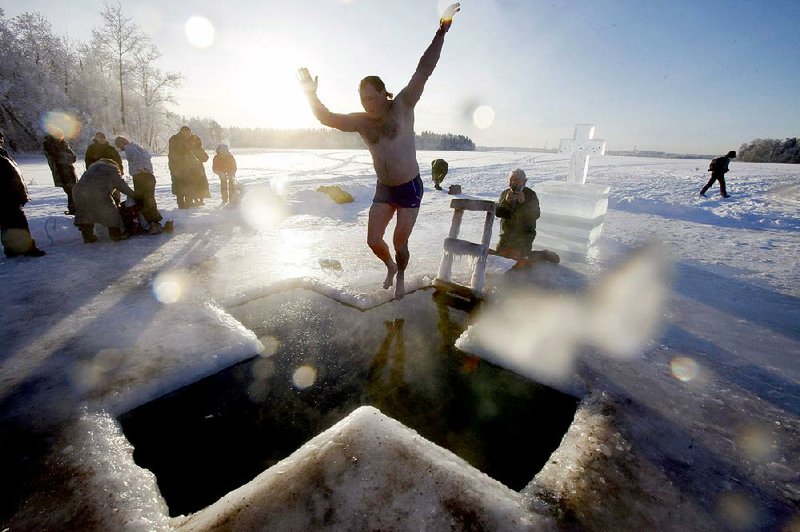
This is not to say that Jesus became "a sinner," but rather, as St. Paul says, the Father "made Him who knew no sin to be sin for us, that we might become the righteousness of God in Him."  That is, Christ in entering the waters meant for our cleansing, cleansed the water Himself, taking on the form of a servant, that in entering the same water in baptism, we too might live in His righteousness.  Baptism saves us not by mere symbolism or some transactional occurrence, but by the power of the Holy Spirit granted to us in baptism and chrismation, changing us as He changed the water.  This is why the water that is blessed at Theophany is reserved -- set aside -- for our use as Christians.  It is, truly, holy water.

Tuesday, January 3, 2023

"That baby boy was circumcised..."

Feast of the Circumcision of Our Lord
The Feast of the Circumcision of Our Lord, God and Savior Jesus Christ

January 1 has the Church celebrating the circumcision of our Lord, God and Savior, Jesus Christ, along with the feast of St. Basil.  I had the good fortune of celebrating both in a parish that claims St. Basil as its patron.  What moves me to write this however, is a comment a dear friend, Emily, made years back about the circumcision of our Lord in connection to the oft-repeated claim, "God is neither male nor female -- God is spirit."

Obviously, God the Father is a spirit, and yet the Church, following our Lord, His Son, calls Him "Father."  Obviously, the Holy Spirit is, as the name suggests, spirit as well.  Both are incorporeal.  Both lack human sexual genetics.  Both could as easily be called by any number of self-chosen pronouns in fashion these days.

And yet our Lord became incarnate as a man.  And not "man" in the generic sense used in the Creed, but as a male human.  How do we know this?  Because, as Emily wisely noted, "that baby boy was circumcised."

Granted, we do not want to get into the weeds of looking up God's skirts.  That is, we do not want to make too much of anthropomorphisms.  It's why we're careful about ascribing words like "anger" to God, and even why we suggest God is not merely love, but is in fact beyond love.  We cannot fathom God's existence, because He is divine and we are created and contingent.  

And yet in the case of Jesus Christ, we know He is male.  He was born that way.  In the parlance of the day He identified that way.  And no small detail -- that baby boy was circumcised.

There is, of course, a sense in which this doesn't matter much.  There is no ontological reason why Christ being born as a man impacts our salvation any more than if He had been born a woman.  But the mystery of the incarnation is that He was born at all.  In order to save us, He entered into our human frailty and sanctified it with His divine presence.  More, in order to fulfill the Law, He entered into the Law fully, submitting Himself not only to the moral commands of God, but even to circumcision, the entrance into the Jewish religion.  That circumcision is fulfilled, as we will soon celebrate at Theophany, in the Baptism of our Lord.  So it matters first and foremost as a matter of historical fact, and secondarily as a matter of proper fulfillment and keeping of the Law.  

The other thing notable about Jesus being born a man is that we do not stop there.  Jesus was born of a woman.  And not just any woman, but the Theotokos, the Mother of God.  We hold her as the greatest saint in all of the Church.  We reverence her and fervently request her intercessions before the Throne of God.  It is often said (typically by Protestants) that the Orthodox pay "too much attention" to Mary.  My own observation, having been an Orthodox Christian for 12 years and counting now, is this perception exists because most Protestants pay almost no attention to Mary beyond the recitation of the Nativity story and perhaps the Wedding at Cana.  So when attending an Orthodox liturgy, perhaps it seems she is all we talk about. The truth is, she is only referenced very occasionally, in the litanies and at the dismissal, as well as in a handful of hymns.  But I would also argue it is this emphasis on the Mother of our Lord that gives balance to the maleness of God, particularly in the Person of His Son.  Because in a very real way, the Incarnation points not merely to the sanctification of Jesus' flesh, but also to His mother's flesh, and through Him (and her), ours.  He enters our flesh and makes it holy with His presence.  He entered her womb and made it (and her) holy with His presence.  And He gives us His flesh and blood to make us holy with His presence as well.

It is fashionable of late to discuss what is inaccurately called "gender" as no more than a social construct.  The Christian Church has never spoken this way, and never will.  Jesus was true man, born of a woman.  That baby boy was circumcised.  And thanks be to God, for in His circumcision, we find the first steps of our own salvation.