Wednesday, February 18, 2026

"Resisting" the lure of Orthodoxy? Try authenticity.


The more I read "objections" (or in this case, "resistance") to the Orthodox faith, the more I come to realize that the Protestant framework is very tightly bound.  By which I mean, writ large, Protestantism only makes sense if there are innate presuppositions that are not questioned.

An article making the rounds right now is a good example of this.  Written by Jonathan Clark for "By Faith" magazine, it is entitled "Resisting the Lure of Catholicism and Orthodoxy."

I cannot, and will not attempt to, speak about how accurate or inaccurate his views on Catholicism are.  The fact that he dumps us together with them is enough to give me pause.  But as to Orthodoxy, he mixes some of the same old tropes with some fresh new ones, but still begs the same old questions.

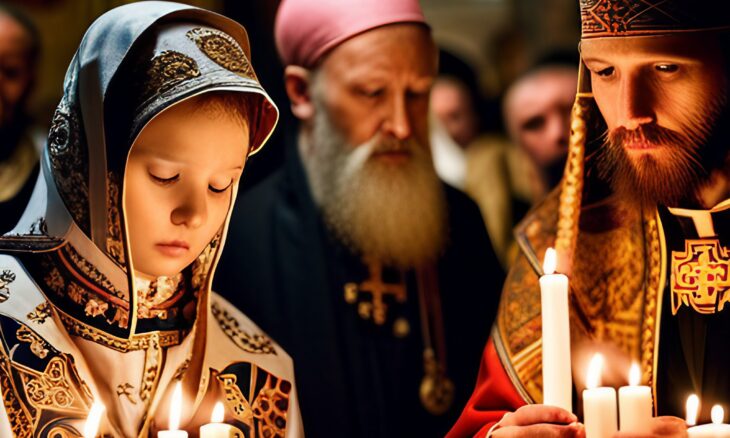
Interestingly, he admits: "One student told me, 'It’s real. What they are doing is the stuff that matters, and the smoke machines at other churches just don’t compare.'"

The student told him what it was that attracted him to the Catholic or Orthodox Church (Clark doesn't specify which the student was referencing).  Clark begins his reductionism by separating the attraction into two components -- what Clark calls the "aura" (or "smells and bells") and the "lore" (history).  Having artificially set up his students' attraction to more historic traditions, Clark then pooh poohs the value of both.

When confronted with students interested in Catholicism or Orthodoxy, Clark says he draws them back to Scripture and explains how each tradition supposedly contradicts what the Scriptures say.  And this is precisely the problem. First, he takes it as a given that his view on Scripture is correct.  As evidence of the errors of Catholicism and Orthodoxy, he offers "justification by faith alone, Real Presence, the authority of Scripture, Mariology, and the adoration of the saints."  He concludes "every time, students listen, but I can tell they remain unconvinced."

Well, is it any wonder if it is presented that way?  "Justification by faith alone" is a Protestant construct.  We in the Orthodox Church do not believe we are "justified" (as Protestants mean that term) by anything other than grace, or through anything other than faith.  We explain that patiently to our catechumens.  The problem is, Clark's formulation leaves no place for good works, and that is simply not a Christian, or a Scriptural, position.

I've said before, every Protestant worth his salt knows Ephesians 2:8-9 by heart:

For by grace you have been saved through faith, and that not of yourselves; it is the gift of God, not of works, lest anyone should boast. 
We agree!  No doubt about it, we are saved by grace, through faith.  Neither grace nor faith is based on our works, but they are gifts from God.  No problem so far.

So what is the problem?  Nobody ever wants to talk about verse 10:
For we are His workmanship, created in Christ Jesus for good works, which God prepared beforehand that we should walk in them.

So we are saved by grace, through faith, and for good works.  And for the Orthodox, and I'd wager the Catholics too, this means salvation starts today.  Salvation isn't something we hope for when we die.  It begins right now.  It begins in baptism.  It begins in chrismation.  It is strengthened and fed in the Eucharist, and it is restored in absolution.  We're not sacramental in order to give an "aura" of piety.  We are sacramental and pious because the sacraments are the very things of life itself!  We don't do good works to "earn" salvation.  We do good works because salvation itself is a life of good works.  We are saved precisely for that purpose.  So when we are justified by God's grace, through faith in Him, what does that mean?  For the Christian, it means we are called to enter into a life, to literally participate in God Himself.  What does it mean that good works were "prepared beforehand that we should walk in them," but that God prepared them so that we should actually walk in them?  We aren't saved because of our good works.  But we will not be saved without them either.

And justification is but one example.  Take "the authority of Scripture."  I'd wager we in the Orthodox Church read more Scripture in one Sunday than most Protestant churches read all week.  That's not to denigrate them -- I admire the zeal with which evangelicals can bring up passages from memory, and take seriously the holy obligation to read the Word of God.  The point is, we don't have a problem with the authority of Scripture.  They have a problem with the authority of the Church, which is to say the Apostolic authority and therefore the authority of God.  I'm not saying this to be mean, I'm saying it because it's true.  And to deal with that, you have to deal with the anachronistic way in which sola Scriptura usually meets us in today's world.  I'm not going to get into all of that here, because it is probably its own series of blog posts.  The short version is this -- most Protestants (not all) view the Scriptures as the source for doctrine, but they were not written down until after the Church was established, and the Church decided which were canonical and which were not.  To say all doctrine is decided by Scripture is to say that there was no doctrine before the Scriptures were written down, distributed, and canonized.  And that is clearly not the case if you know anything about Christian history.

Not dissuaded by these problems, which I assume he does not recognize, Clark also does himself and his own tradition a disservice by dismissing the attraction to Orthodoxy and Catholicism.  He suggested Presbyterians like himself could offer higher liturgical services and more smells and bells, but then immediately discarded the idea, saying "the average PCA church cannot (theologically and practically) offer the experience of the Mass or Hours; and second, it just feeds the problem. Like kids on a beach, the next pretty shell makes them drop all others."  If he's right about that, and these young ones are really only delusional children seeking pretty shells, then I guess he has a point.

But if he's wrong......

And I definitely think he is wrong.  We have a lot of young inquirers, catechumens, and converts in our little mission parish. We always ask "so what attracted you to Orthodoxy?"  Not one of them has said "oh, it's so pretty!"  Not one.  They do tell me they began to study Church history and realized something in their own Christian formation was off.  The non-Christians often tell me they see in Orthodoxy a holistic theology and practice that makes sense to them.  Most of our converts are Protestant of some stripe or another, but from Pentecostal to Presbyterian, all of them see in the Orthodox Church a fullness that they find lacking elsewhere.

That's what drew me here.  As I wrote in the second-ever post on this blog:

Over time, what we have seen in our months among the people of St. Stephens and what we have come to believe (or, rather, to recognize) is that she has a rightful claim to be the historic Church of the Apostles, the New Testament Church founded by Christ. We have therefore come to believe that the Orthodox Christian Church maintains the faith of the Apostles in the fullest, most authentic sense.

Reducing that to "the next pretty shell" is dismissive and insulting to those seeking the fullness of the faith.  If Clark recognized this, then he wouldn't be so confused about why his arguments are rejected.  He's insulting the very people he hopes to retain. But he apparently doesn't recognize this, which is sad.

It seems to me that we in the Orthodox Church spend a lot less time trying to woo people from the Presbyterian Church and other denominations than they spend trying to keep their people from coming to us.  Every couple of years one of these articles pops up (the last one I noted was from a Lutheran and I wrote about it here).  It's the same, scared, antsy presentation each time.  "We can't compete with their beauty and mysticism and historicity, so how do we tell these rubes who are so easily distracted by shiny objects that it's wrong?"

It isn't a good look.  It's no wonder it doesn't work.  I wish people who want to critique Orthodoxy would take the time to actually put in the work and try to understand it.  As long as they refuse to, the exodus will continue.  Young people aren't stupid.  Treating them as if they are is no way to convince them you're right.

For our part, we simply love them and try to be truthful with them.  We fail, because we are sinners.  I can only hope they appreciate the effort despite our failings.  Because really, that is what Orthodoxy is about.  Neither the aura nor the lore can replace love.  And love begins by showing basic respect.  Be who you are, be kind and loving, and stop worrying so much about what's wrong with us.  If that doesn't work, no amount of railing against our beauty and history, as if those are bad things, is going to do any better.

Friday, January 9, 2026

The Mission of Fatherhood


We have a priest!

Well, we've always "had a priest."  We had Fr. Gabe as our priest-in-charge from the inception of this mission, up until last month.  He served honorably and loved us and guided us well.

And we also had Fr. Tom, from this past June until last month, serving as our visiting priest, ensuring we were able to have Sunday communion services and confession without having to go to two different places to get all of that.  He also served honorably and loved us and guided us well.

This is different, though more in scope than in kind.  Fr. Seth Earl is now our priest-in-charge and is formally attached to our little mission.  He is serving honorably and loving us and guiding us well.  But he is ours.  We are his.  That was all true with Fr. Gabe and Fr. Tom as well, and both of those fine priests always treated us as their own, and we loved them as our own.  But neither of them was called to devote their full attention to us, and not because they did not want to.  Fr. Gabe is the rector of a very busy parish in Atlanta.  Fr. Tom is retired.  St. Patrick could not be first priority for either of them.  They were our fathers, and they were fatherly, but they also had their own flock and their own lives.

That, in itself, is good in its own way.  It teaches us that we are not so very important.  It teaches us to defer to our brethren, whether those at St. John the Wonderworker who shared a father with us, or those in Fr. Gabe's or Fr. Tom's respective families who would like to see them on occasion, or simply to one another. It teaches us to be patient and wait for the Lord to act.  I am certainly not complaining about not having a full service life or priests who look after our every concern.  It is good for us, and it is good that the Church sends us shepherds as she has the ability to do so.  The alternative would be sending shepherds who are not ready, or who cannot keep up with the demands of too many sheep.  We have been blessed beyond measure by the shepherds she has sent us. 

But now she has sent us our very own shepherd.  And he is another blessing.

I have heard many people speak of how missions sort of spin their wheels and mark time up until they get a priest, and then things begin to really move.  There are reasons for that involving practicality -- a parish seems "real" when there is a clergyman there who can do everything any other parish can do, and it seems somehow "less than" if it cannot do everything any other parish can do.  That's normal.  You might give a new dentist a chance if he has a meager and modest office, but probably not if he starts pulling drills and picks and scalers from the trunk of his car and asks you to sit down on the curb and tilt your head back.  There is a "marketing" aspect to having a full liturgical life and a priest of your own.  There is a worldly sense of authenticity and competence.

But beyond practicality, I am convinced that there is a spiritual component to it. There is a concreteness to having the diocese send you a priest, put him on the church's website and say "this man is attached to this mission" for the world to see.  There is no confusion, and no overlapping magisteria.  There is no division of priorities and no overwhelming the pastor with the responsibilities of shepherding dual parishes.  We have one priest who is in charge of the entire mission, entrusted by our Archdiocese to be our pastor.  This binds us all together as a parish family, with a spiritual father.  And fathers are important, in the parish as much as in the home.  We think of a parish having a "head," not in terms of worldly responsibility, but in the sense of binding it all together, as the Father binds the Holy Trinity in Himself, and is its fount and source.  Fathers are not merely deciders.  Fathers are the glue that holds the family together as one.

Fr. Seth's first services with us as our pastor came this past weekend.  With them, there was a sense that this is finally real.  Someone is now in place to care for us, to protect us, and to ensure that the Church flourishes in our little corner of West Georgia.  We are his sole priority in terms of shepherding.  And while in the world, some of those things are administrative functions, in the Church (as in the family and in the home), they are also spiritual and ontological.  Fr. Seth isn't just our leader, or our boss.  He is our father in Christ.  Like most priests, he is fatherly in his approach. Which is to say, he leads gently, but firmly.  He loves.  He is kind and patient.  When we err he forgives us.  When he eventually errs, we will forgive him. We learn to become spiritual children, not in the sense that we've all done it before, but in a day-to-day sense.  We learn to submit, and to honor, and to return the love Fr. Seth shows forth to us, because it is the love of Christ Himself, Who through His Church sent Fr. Seth to us.  In turn, good fathers show forth Christ by seeing Christ in their children, and in everyone else around them.  A good father teaches us to do the same, to him and to everyone around us as well.

We are under no delusion that our new priest is perfect.  We have all been fortunate to serve under some extraordinary priests.  Stephanie and I have had the great fortune, most recently, of being shepherded by Fr. Paul, who is an outstanding priest.  For a brief time since, we have served under Fr. Gabe, and of course our first priest was Fr. Andrew, both of whom are outstanding priests.  We have had Fr. Tom serve as our spiritual father and confessor for the past several months, and Fr. Tom is another outstanding priest.  We know what it means to have great priests, and we know that the greatest of those priests is not infallible.  Priests are men.  Like biological or adoptive fathers, our spiritual fathers are sure to fail us at times.  When that inevitably happens, I must remember my own failings as a father, and forgive as I would hope my children forgive me.

We also know that Fr. Seth is aware that none of us is infallible.  We will mess up.  We will disappoint him, fail him, perhaps hurt him.  When we do, he will forgive us.  Not because he is legalistically bound to forgive.  Not even because he wants to forgive deep down in his heart (though he surely does).  He will forgive because that is what fathers do.  Not in a legalistic sense, but simply because we are his children.

Those bonds of love in the Church are not always easy, and they do not always result in warm and fuzzy feelings.  Sometimes loving and forgiving other people is hard and messy.  Sometimes it leaves us feeling hypocritical, or perhaps taken advantage of.  But through the Church, those bonds lead us to salvation.  And that begins with the Church giving us a father.  Thanks be to God!