Friday, January 6, 2023

Holy Theophany


Holy Theophany is a celebration somewhat unique to the Eastern Church.  Some Western churches do celebrate it in conjunction with Epiphany (also on January 6), but others do not.  The distinction among us comes from the emphasis placed on the baptism of our Lord.

Epiphany is a Greek word meaning "to manifest" or "to appear."  Usually, in the Western traditions, it celebrates the visitation of the Magi in addition to the baptism of Christ.  In the East, however, it is bound up in Christ's baptism, which is why it is called "Theophany," meaning "appearance of God."  

At Christ's baptism, the first earthly manifestation of the entire Trinity was revealed.  As the Troparion of Theophany tells us:

O Christ our God, when Thou was baptized in the river Jordan

Worship of the Trinity was revealed

For the voice of the Father came forth to testify and name Thee His beloved Son

And the Spirit in the form of a dove, confirmed the truth of His Word

Wherefore, O Thou Who didst appear, and didst enlighten the world, Glory to Thee

The baptism of Christ has deep meaning for Christians.  First, He bowed His head to receive from John the Forerunner, His unworthy servant, the baptism of remission of sins.  Christ took on our sin so that we might take on His righteousness.  Second, in doing so, He cleansed the waters, calling down the Holy Spirit and hearing the voice of the Father "this is My beloved Son, in Whom I am well pleased."  Third, He changes the water from a mere washing of dirt from the flesh, into a baptism of rebirth and regeneration, as St. Peter tells us.  

This is not to say that Jesus became "a sinner," but rather, as St. Paul says, the Father "made Him who knew no sin to be sin for us, that we might become the righteousness of God in Him."  That is, Christ in entering the waters meant for our cleansing, cleansed the water Himself, taking on the form of a servant, that in entering the same water in baptism, we too might live in His righteousness.  Baptism saves us not by mere symbolism or some transactional occurrence, but by the power of the Holy Spirit granted to us in baptism and chrismation, changing us as He changed the water.  This is why the water that is blessed at Theophany is reserved -- set aside -- for our use as Christians.  It is, truly, holy water.

Tuesday, January 3, 2023

"That baby boy was circumcised..."

Feast of the Circumcision of Our Lord
The Feast of the Circumcision of Our Lord, God and Savior Jesus Christ

January 1 has the Church celebrating the circumcision of our Lord, God and Savior, Jesus Christ, along with the feast of St. Basil.  I had the good fortune of celebrating both in a parish that claims St. Basil as its patron.  What moves me to write this however, is a comment a dear friend, Emily, made years back about the circumcision of our Lord in connection to the oft-repeated claim, "God is neither male nor female -- God is spirit."

Obviously, God the Father is a spirit, and yet the Church, following our Lord, His Son, calls Him "Father."  Obviously, the Holy Spirit is, as the name suggests, spirit as well.  Both are incorporeal.  Both lack human sexual genetics.  Both could as easily be called by any number of self-chosen pronouns in fashion these days.

And yet our Lord became incarnate as a man.  And not "man" in the generic sense used in the Creed, but as a male human.  How do we know this?  Because, as Emily wisely noted, "that baby boy was circumcised."

Granted, we do not want to get into the weeds of looking up God's skirts.  That is, we do not want to make too much of anthropomorphisms.  It's why we're careful about ascribing words like "anger" to God, and even why we suggest God is not merely love, but is in fact beyond love.  We cannot fathom God's existence, because He is divine and we are created and contingent.  

And yet in the case of Jesus Christ, we know He is male.  He was born that way.  In the parlance of the day He identified that way.  And no small detail -- that baby boy was circumcised.

There is, of course, a sense in which this doesn't matter much.  There is no ontological reason why Christ being born as a man impacts our salvation any more than if He had been born a woman.  But the mystery of the incarnation is that He was born at all.  In order to save us, He entered into our human frailty and sanctified it with His divine presence.  More, in order to fulfill the Law, He entered into the Law fully, submitting Himself not only to the moral commands of God, but even to circumcision, the entrance into the Jewish religion.  That circumcision is fulfilled, as we will soon celebrate at Theophany, in the Baptism of our Lord.  So it matters first and foremost as a matter of historical fact, and secondarily as a matter of proper fulfillment and keeping of the Law.  

The other thing notable about Jesus being born a man is that we do not stop there.  Jesus was born of a woman.  And not just any woman, but the Theotokos, the Mother of God.  We hold her as the greatest saint in all of the Church.  We reverence her and fervently request her intercessions before the Throne of God.  It is often said (typically by Protestants) that the Orthodox pay "too much attention" to Mary.  My own observation, having been an Orthodox Christian for 12 years and counting now, is this perception exists because most Protestants pay almost no attention to Mary beyond the recitation of the Nativity story and perhaps the Wedding at Cana.  So when attending an Orthodox liturgy, perhaps it seems she is all we talk about. The truth is, she is only referenced very occasionally, in the litanies and at the dismissal, as well as in a handful of hymns.  But I would also argue it is this emphasis on the Mother of our Lord that gives balance to the maleness of God, particularly in the Person of His Son.  Because in a very real way, the Incarnation points not merely to the sanctification of Jesus' flesh, but also to His mother's flesh, and through Him (and her), ours.  He enters our flesh and makes it holy with His presence.  He entered her womb and made it (and her) holy with His presence.  And He gives us His flesh and blood to make us holy with His presence as well.

It is fashionable of late to discuss what is inaccurately called "gender" as no more than a social construct.  The Christian Church has never spoken this way, and never will.  Jesus was true man, born of a woman.  That baby boy was circumcised.  And thanks be to God, for in His circumcision, we find the first steps of our own salvation.

Sunday, December 18, 2022

God is Merciful


Such a simple truth.  A truism even.  But today as we approach the Nativity, it weighs particularly heavy on me how great a truth it is.

I think two passages of Scripture put things in their proper place:

"We love because He first loved us." 1 John 4:19

"In this manner, therefore, pray:  Our Father in heaven . . ." Matthew 6:9

God is our Father.  We -- men and women -- are sons of the Father.  What this means is our faith -- which is properly understood not as mere belief, but as trust -- flows not from our obedience, or our fear, or our desire to avoid punishment, but from our love of God.  And that love is only rightly expressed as a return of His love to us.  Anything less and it is not true love.  We love God in the same way a child loves his father.  Not because he fears his father's wrath or punishment, but precisely because when that child was at his lowest, his weakest, his most helpless, his father took him in his loving arms and cared for him.  A father sacrifices his own comfort and happiness to see his children thrive.

This Nativity season, we remember when God sent His only begotten Son to us.  Not so we might avoid punishment, but so that we might live.  This is how we rightly understand our obligations as Christians.  It is why we love our neighbor, it is why we are obedient to bishops and priests and parents and earthly authorities.  It is why we avoid sin, go to confession, attend the services of the Church, and pray often. Not because God needs us to do it in order to save us, but because it is good for us, and God loves us and wants us to be healthy and whole.

Too often, Christians find themselves mired in a moralistic, legalistic pseudo-Christian faith where God is the judge and we are the accused, and therefore the basis of our obedience, faith and law keeping is to avoid punishment.  But the Scriptures do not speak this way.  God does not accuse us.  Satan does.  "Then I heard a loud voice saying in heaven, 'Now salvation, and strength, and the kingdom of our God, and the power of His Christ have come, for the accuser of our brethren, who accused them before our God day and night, has been cast down.'"  Revelation 12:10.  And while certainly there is a Patristic thread that indicates we ought to self-accuse in order to see our own sin, for example, St. John Chrysostom's Three Homilies on the Devil, we also see in that same Patristic thread the notion that accusing others is of the devil:

For that ye partake of the divine oracles insatiably, that day particularly showed: whereon I discoursed about the unlawfulness of speaking ill one of another, when I furnished you with a sure subject for self accusation, suggesting that you should speak ill of your own sins, but should not busy yourselves about those of other people: when I brought forward the Saints as accusing themselves indeed, but sparing others: Paul saying I am the chief of sinners, and that God had compassion on him who was a blasphemer, and a persecutor, and injurious, and calling himself one born out of due time, and not even thinking himself worthy of the title of Apostle: Peter saying Depart from me because I am a sinful man: Matthew styling himself a publican even in the days of his Apostleship: David crying out and saying My iniquities have gone over my head, and as a heavy burden have been burdensome to me: and Isaiah lamenting and bewailing I am unclean, and have unclean lips: The three children in the furnace of fire, confessing and saying that they have sinned and transgressed, and have not kept the commandments of God. Daniel again makes the same lamentation. When after the enumeration of these Saints, I called their accusers flies, and introduced the right reason for the comparison, saying, that just as they fasten themselves upon the wounds of others, so also the accusers bite at other people's sins, collecting disease therefrom for their acquaintance, and those who do the opposite, I designated bees, not gathering together diseases, but building honeycombs with the greatest devotion, and so flying to the meadow of the virtue of the Saint: Then accordingly—then ye showed your insatiable longing.

When I first visited an Orthodox Church, the thing that struck me most was the line from the dismissal that is the title of this blog.  The entire dismissal is:

May he who rose again from the dead, Christ our true God, through the intercessions of His all-immaculate and all-blameless holy Mother; by the might of the precious and life-giving cross; by the protection of the honorable bodiless powers of heaven; at the supplication of the honorable, glorious Prophet, Forerunner and Baptist John; of the holy, glorious and all-laudable apostles; of our father among the saints, John Chrysostom, archbishop of Constantinople; of the holy, glorious and right-victorious martyrs; of our venerable and God-bearing fathers; of (saint to whom the temple is dedicated); of the holy and righteous ancestors of God, Joachim and Anna; of the (saint(s) of the day) and of all the saints: have mercy on us, and save us, forasmuch as He is good and loveth mankind.
As we approach the Divine Nativity of Our Lord, let us remember that the Father sent His only begotten Son, our Lord, God and Savior Jesus Christ, not to accuse us, but to unite us to Himself. And as we continue the fast, increase our prayer and devotion, and celebrate the coming Feast, let us recall that great love, that our longing, too, might increase.  God is merciful.  We love because He first loved us.

Friday, December 31, 2021

Jason Isbell, Morgan Wallen, and Redemption


This is one of those stories I'd ordinarily not talk about here.  I do so mainly because it illustrates the failure of our modern culture to appreciate the value of redemption.

For those who are unaware of the story, Morgan Wallen is a country music artist. I have never purchased one of his albums, nor seen him in concert, and for the most part he is not the sort of fellow I'd give much of my attention to.  This was made all the more so when, in February of this year, a video of Wallen circulated wherein he was highly intoxicated and used the n-word to refer to a friend of his.  The friend is apparently not black, though I'm not sure which would be worse.  This sort of colloquial use of that word is one for which I have little use; however, suffice it to say, there is not a white person in this country who ought to use that word in any context.  It was bad.

Wallen was rightly, and quickly, criticized by nearly everyone.  He was also remorseful and apologetic.  You can read (or watch) his complete statement here:

https://www.rollingstone.com/music/music-country/morgan-wallen-apology-video-1126831/

He also pledged $500,000 to black-led groups, earmarking part of it in $15,000 chunks in the names of 20 people who counseled him following this incident, and leaving with them the option of donating to the charity of their choice or keeping it within the BMAC, the organization to whom he donated the money.  

Is that sufficient remorse?  It's not for me to say.  Ultimately, those he has harmed must answer that question, as must his fans and the country music industry.  The latter, at least, have answered that question by continuing to purchase his albums and go to his shows.  In droves.

Enter Jason Isbell.  Jason Isbell, by contrast to Morgan Wallen, is one of my favorite songwriters and recording artists.  I love his work with the Drive-by Truckers, and I love his solo work, especially his 2013 masterpiece, Southeastern.  Jason Isbell writes songs about redemption.  His redemption.  In a particularly strange twist of irony, perhaps the greatest of these songs is a song off of Southeastern entitled "Cover Me Up."  "Cover Me Up" was covered by Morgan Wallen.  This embarrasses Jason Isbell, in the bright light of 20/20 hindsight.

"Cover Me Up" is a song about a drunk, high, stoned, arguably abusive Jason Isbell, and how his now-wife, then-girlfriend Amanda Shires helped him through that period in his life to become a better man. The lyrics include masterpieces such as these:


 Days when we raged, we flew off the page
Such damage was done
But I made it through, 'cause somebody knew
I was meant for someone


* * *
Put your faith to the test 
When I tore off your dress
In Richmond on high
But I sobered up, I swore off that stuff
Forever this time
The old lovers sing
"I thought it'd be me who helped him get home"
But home was a dream
One I'd never seen 'til you came along


It is a particularly beautiful song, one that sounds themes of weakness, pride, hurt and ultimately humility, humiliation and eventual redemption. It is a song about brokenness, recovery and hope.

Because Morgan Wallen covered "Cover Me Up," Isbell thought it right to condemn Wallen's words when they were initially made public. He called them "disgusting and horrifying." He was right. They were. And he was also right that Wallen owed an apology and much, much more. For his part, Isbell donated the songwriting royalties for the Wallen version of "Cover Me Up" to the NAACP. This, too, was a noble act. After announcing the donation of the Wallen royalties to the NAACP on Twitter, Isbell's manager said he does not plan to comment beyond the tweet. This month, Isbell broke that promise.

This is, in part, because Wallen's redemption has been more than expected, certainly by Isbell at least. Morgan Wallen had the best selling album of 2021. Not the best-selling country album, the best selling album in any genre. His tour has played to sold-out venues all summer. One can imagine lots of reasons why, but two seem readily apparent. First, the attempt by people like Isbell to "cancel" Wallen generated a backlash. Second, people love a good redemption story.

Isbell talks about the second of those in a recent interview. Referencing George Jones, he says "excuses have been made over and over to try to craft that same white male narrative. It’s just part of the story. It’s like, ‘yes, sometimes, as white men who’ve been put upon, we slip and we make mistakes, but we can rise again! And that’s country music, folks.'" So to the extent country music fans, and Americans in general, believe in rising above your mistakes, Isbell thinks this is a terrible thing. Well, except for the success of his own version of "Cover Me Up," which is ironically about that very thing. Isbell sounds the themes, reaps the rewards, and then refuses to acknowledge that the same impetus that made his fans love "Cover Me Up" is the one that sends Morgan Wallen's fans to buy his album and attend his shows. The irony in this is hard to miss.

However, there is a greater issue, and it's the one Isbell doesn't talk about, except in an ironic sense because he's making it worse. Again referencing George Jones, he says "there’s a lot of shit that George did that was not cool, shit that you really should not be able to be completely redeemed from." Well, who is Jason Isbell to decide what one ought to be "completely redeemed from?" Does he want to live by those rules? The guy who "tore off (her) dress in Richmond on high?" Listening to Isbell's music, it is apparent that the very themes he sounds himself are the ones he cries against most loudly when others reap the benefit. This is a textbook example of why the phrase "virtue signaling" was invented.

This isn't the first time Isbell has done this either. In June of 2020, Mike Fuller, who makes Fulltone guitar pedals, made a comment on his own website about the rioting in Los Angeles, where Fulltone is based. He decried the looting "with 100% impunity," and said the mayor and governor don't care about small businesses. For this, Isbell took to Twitter to tar Fuller as a racist. He said "Check out black-owned pedal company Dogman Devices. http://Dogmandevices.com I’ve not used them but they seem to be good and fulltone has always made overpriced junk." So Isbell doesn't purchase Dogman Devices pedals, he calls Fulltone Pedals "overpriced junk" (which is nonsense -- I own two of them and they are fantastic pedals, whatever one thinks of Mike Fuller's politics), and he gets in his Twitter virtue signal and his shot at Fuller. But what has he actually done? Maybe he began purchasing Dogman Devices pedals? Even assuming so, before that he had ignored them in favor of other manufacturers. He wasn't promoting that pedal company except in an attempt to tear down Mike Fuller's pedal company. So what makes him better than Mike Fuller? Mike Fuller never trashed Isbell's music publicly, after all.

All of this highlights the real issue. Isbell is not speaking now because Morgan Wallen's apology, donations and remorse are insufficient. And being honest, he's not speaking now because Morgan Wallen did "shit that you really should not be able to be completely redeemed from." That's not his call to make. He's speaking now because he has a large following on Twitter, and he has made a name for himself in large part by calling for the cancellation of people he disagrees with. And let's be even more honest -- that desire to destroy Wallen is precisely why Wallen's fans flock to him all the more. It's why Wallen's albums outsell Isbell's by multiples, and why Wallen sells out bigger venues routinely. Granted, part of this is the different way they make music -- Isbell is and has always been a smaller operation, and as a songwriter he is not willing to make the compromises people like Wallen make to be a bigger artist. That is commendable. But after that video surfaced, Wallen's career could easily have been over. Instead, people like Isbell unwittingly encourage his fans to embrace the redemption story. And that is a good thing, if only Isbell could see it.

The prideful impetus that makes Isbell feel he has to speak out against Wallen is not based in a desire for Wallen's redemption. Far from it. Isbell seeks Wallen's destruction in order to appease his fans. And ironically ends up helping him to be bigger than ever. It is an indictment on our society that this is encouraged by anyone, or seen as virtuous. And while I doubt I will ever buy a Morgan Wallen record or concert ticket, I have not yet lost so much of my humanity that I don't appreciate the value of redemption. It is the core of what the Christian Church teaches us. We are all rotten. But there is hope, and that hope is in Christ, Who calls us to become by grace what He is by nature. Who, yes, redeems us.

It is, I suppose, a great irony that if I did not believe so much in the value of redemption, I wouldn't like Jason Isbell's music as much as I do. And it is a great tragedy that he fails to see that.

Saturday, July 17, 2021

Vaccine Skepticism, Vaccine Skepticism Disguised as Vaccine Promotion, and Love of God and Neighbor


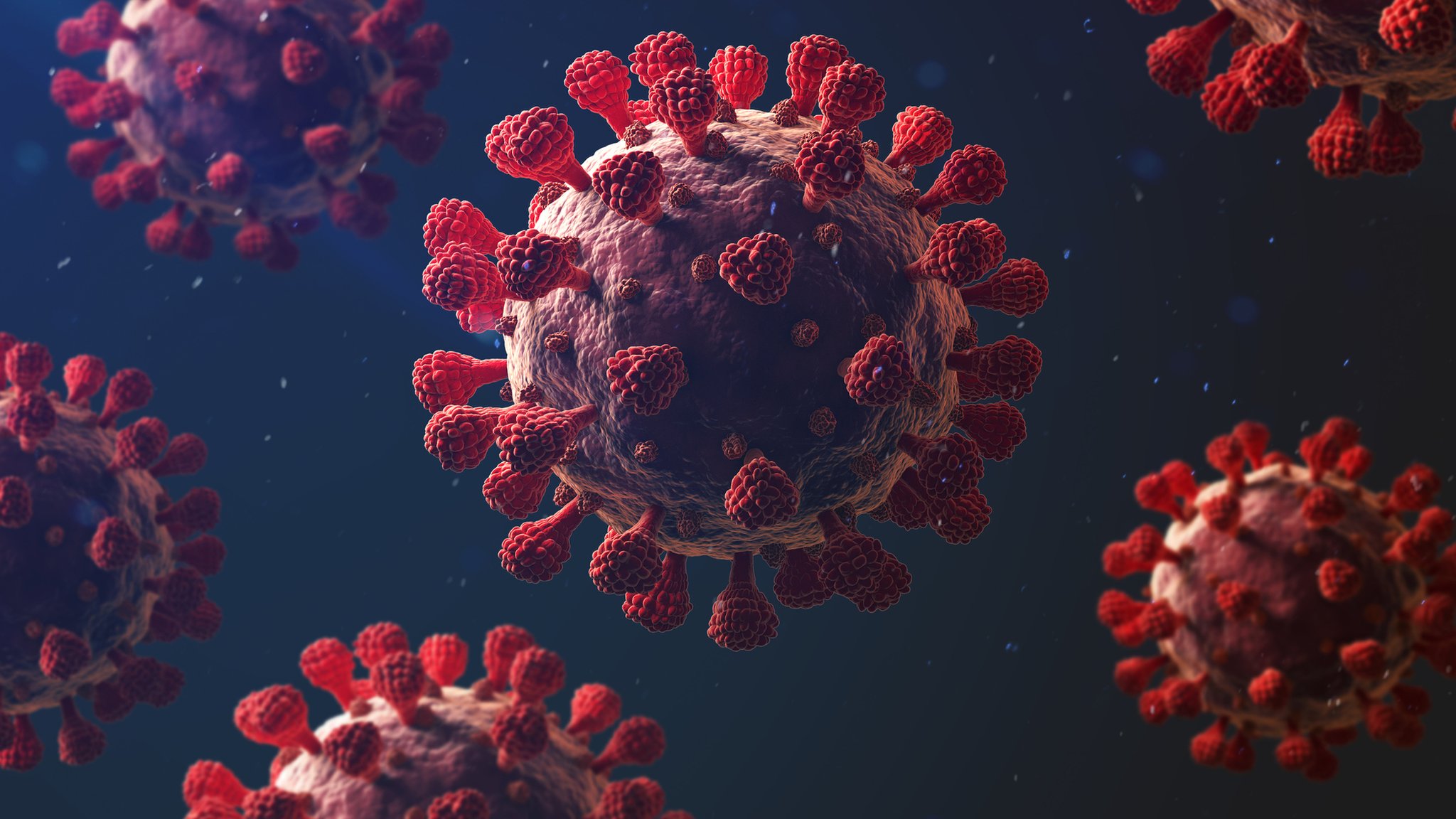
This little speck has caused untold damage to our world.  The damage I write about today, however, is the damage it has done to our souls.  
I still frequent a handful of internet discussion boards that discuss theology and theological matters.  On one in particular, I was saddened to see the politics of COVID override Christian love of neighbor.  In this case, it dealt with those who were fearful of their unmasked and unvaccinated neighbors.  Such people were called "crazed," and at least one person said he "lacked sympathy" for anyone who would not get vaccinated. Today, in a comment that caused me to reconsider my hesitance to publish this, one of them said that healthcare workers' lives were "endangered" by the unvaccinated.  

I also, in contraindication of the health of my own soul, still frequent social media sites.  On one of those (likely the one you received this link from), another person suggested that anyone who vaccinates their minor child is guilty of "child abuse."  I'll elaborate on my thoughts about both downstream.  I'll say at the outset, this is not intended to be a condemnation of the people who took these positions.  It is, rather, a case study in how we as Christians actually deal with each other (all involved are professing and practicing Christians), and an encouragement as to how we should.  The people who said these things are not mentioned for that reason.  It isn't about them, it's about us and how we treat one another.

Part of the problem, no doubt, is the general polarization and ugliness of our politics.  We are not a tolerant people.  We were not a tolerant people when the self-styled champions of what they called "tolerance" (but which was actually authoritarian thought policing) still pretended to believe in it.  So it is to be expected, I suppose, that it is not enough to disagree.  We must also tear down, ridicule, lampoon, demean, and seek to control and conform.  We spring to hyperbole as if it were the most persuasive way to discourse -- there is a reason this moment in time has required the coining of Godwin's Law.  We blame social media for this, but the truth is it is who we are, what we allow ourselves to be.  But the problem also stems from fear and a desire to control others, and therefore the natural outcome of man's fall into sin.  These are the points I want to drill down on.  

We know from the Scriptures and the Church Fathers that the problem of man is the problem of mortality.  Stripped bare of our communion with God, and therefore imprisoned in this body of death, we turn inward, and seek to protect ourselves first.  We seek to do so often by attempting to control the behavior of others.  Lacking trust in God and love of neighbor, we put our needs above our neighbor and seek to survive.  This is why, some Fathers suggest, all sins ultimately trace back to pride and love of self.  It is why the great ascetics, and monastics like St. John Climacus, make such a great deal of denying the self.  It is why we fast.  It is why we do prostrations.  We teach ourselves to deny the self and live for God and neighbor.

So returning to these two objections in this light.  The first, that those who will not get vaccinated (or wear masks if they are vaccinated) are in essence bad people, is obviously about fear and control.  One person who took that approach suggested that absent a doctor's excuse, anyone who refuses to be vaccinated should be forbidden from going in public spaces.  Forbidden from holding certain jobs.  Forbidden from using public transportation.  (Whether these are good or bad policy provisions is beyond the scope of my point -- I am speaking about how we as Christians view our neighbor).  When pressed, he said they should not be allowed to use the public accommodates he uses.  Since he was the fearful one, I asked why he did not stay home.  I did not receive an answer.  Today, as noted, this same person suggested that the mere presence of the unvaccinated threatens the lives of healthcare workers.  Even though healthcare workers were the very first in this country to receive the vaccines, this person thinks unvaccinated people are a threat to their lives when they come to the hospital for treatment.  Who is the real vaccine skeptic here?  Most of the people in the discussion -- even those of us opposed to vaccine mandates, but still in favor of vaccine promotion and encouragement -- at least believe the vaccines work.

This person is vaccinated, as am I, and as was, best I was able to tell, everyone else in the discussion. Yet his fear of being around those who are unvaccinated was practically palpable, and it was highlighted best in the comment today.  This fear and skepticism caused him to suggest his neighbor should essentially be imprisoned in his own home for the crime of endangering people who took steps to mitigate the danger, as if those steps are insufficient.  It didn't matter that the unvaccinated neighbor actually poses very little real public health threat at the moment, much less a threat to this man in particular or vaccinated healthcare workers.  No, he thought everyone should get a vaccine, and therefore he was willing to take away the freedom of his neighbor in order that he might travel freely and without his own irrational fear of illness or death.  He and a couple of others said expressly they could conceive of no good reason why anyone might want to avoid being the first in line to take a vaccine that is not FDA approved, and the long-term efficacy of which is still undetermined.  I can articulate many good reasons why I got the vaccine as soon as it was available (and I do so below).  But these men could think of no reasons why anyone else might have taken a different approach than they, and I, did.  For those of you who are similarly unable to conceive of why anyone would not want to get a vaccine, I offer this:

https://www.npr.org/2020/12/20/948614857/race-and-the-roots-of-vaccine-skepticism

At any rate, lacking trust in God and love for neighbor, these folks are willing to harm their neighbors to make themselves feel better.

On the other side of the aisle, so to speak, is the man who proclaimed it "child abuse" to vaccinate minor children.  He also commented recently, demonstrating his pride that he would not be getting vaccinated.  The reasoning is sound enough for him to make that decision for himself and his kids -- minor children are generally unaffected by the COVID virus and therefore for him the risks of the vaccine outweigh the risks of the virus.  If he doesn't want the vaccine for a variety of good reasons, as noted above, that's certainly rational, even if I would (and did) disagree.  So far, so good.  

For our family, I disagreed for several reasons.  First, I don't want my children to be a danger to others.  It was love of neighbor that prompted me to get the vaccine myself, and to encourage my wife and oldest child to get it, and that same love prompts me to encourage my youngest two to go now that they are able (both received their first dose of Pfizer yesterday and are doing well).  I understand there are risks associated with this vaccine, and others, but I also understand that the best way to defeat the virus, best we know, is to have more people inoculated.  It will not go away, we understand that.  But being able to fight it off will return us to a post-pandemic world with less sickness, less death, and less pain than simply waiting it out and hoping enough of our loved ones survive to obtain herd immunity.  Second, the newer COVID variants, especially the currently prevalent Delta variant, affect younger people differently than the initial outbreak.  So we don't really know that minors are unaffected by mutations of the COVID-19 virus.  That's my reasoning, and it is at worst equally sound.  

Yet, despite the fact that my children are not his children, not his to raise, and not his to influence, this person decided to announce publicly that I am abusing them by my decision to vaccinate.  No, he did not direct those words at me personally.  Rather, he directed them at everyone thoughtlessly (I do not think he was being malicious).  Why?  Because he holds a very strong distrust toward the vaccines, and so lacking fear of God and trust in neighbor, he wrote to discredit the vaccines rather than simply trust that others could engage in good decision making without his judgment.  As part of that, he engaged in hyperbole that puts me and others like me on equal footing with people who beat their children or deprive them of food.

I'll repeat here that I don't write this to condemn any of these men.  For one, I am hardly innocent of the charges of fear and desire to control others to conform to my way of thinking.  I'm sure my words could as easily be used in someone else's blog post.  And I am hardly innocent of being judgmental of others and lacking in love for my neighbor, both before and since the word "COVID-19" came into our common lexicon.  I write because both are such good illustrations of how this pandemic illuminates our spiritual illness.  We fear disease of body, and we end up ignoring our diseased souls.  Often, the very basic dignities and freedoms of humanity are the first to go out the window.  

St. John Climacus wrote: “The blessed living corpse grows sick at heart when he finds himself acting on his own behalf, and he is frightened by the burden of using his own personal judgment.”  John Climacus, The Ladder of Divine Ascent (New York: The Missionary Society of St. Paul, 1983), 92.  He also wrote: "Repentance goes shopping for humility and is ever distrustful of bodily comfort," and "the penitent stands guilty – but undisgraced.”  Ibid, 121.  Finally, he wrote: “The first stage of blessed patience is to accept dishonor with bitterness and anguish of soul,” while “[t]he perfect stage, if that is attainable, is to think of dishonor as praise.”  Ibid, 149.  As Christians, this is our calling.  We don't often like it, and I for one frequently rebel against it.  But we are called to put ourselves behind our neighbor, most especially in terms of offense, bodily comfort and pride.  We are to put our neighbor's ease ahead of our own.  As noted above, for good or ill, whether I was right or wrong, this is one reason I chose to get vaccinated early.  I knew that in order to ask my family and friends to be vaccinated themselves, I had to step up to the plate.  I knew that if there were any ill effects (there were, all temporary, but all miserable in the short term), I could not ask others to withstand them if I was unwilling to do so myself.  I don't say this to suggest I am such a good person -- again, I judge, I mock, I scorn, I fear.  It is to say I hope I repent, and I hope others do as well.  

We are truly all in this together.  Until you have seen someone you care about out of work due to the pandemic, or been there yourself, you have no call to suggest people be deprived of their livelihoods.  Until you have seen someone you care about suffer, perhaps even die, or been there yourself, you have no call to suggest people who attempt to avoid the ill effects of this disease by getting vaccinated are evil.  I hope that as we move forward, we can take another look at how we deal with one another, and apply a healthy dose of charity and grace to our neighbor.  Especially as Christians, we have a holy obligation to put the best construction on our neighbor's words and actions.  I write to ask that everyone get in line behind me to repent of those many times we fail in that obligation.

Sunday, December 27, 2020

Decade


Ten years ago at Nativity, my family and I were chrismated as newly illumined Orthodox Christians.  In that ten years, my life has changed in immeasurable ways.  I was tonsured a reader fairly early on -- about two years in.  I managed to complete the St. Stephen Course in Applied Orthodox Theology this past year, a goal I set for myself when we became Orthodox.  I have attended two Sacred Music Institutes and hope to attend more still.  I have visited the Antiochian Village, venerated the relics there, and prayed at the resting place of the saints buried there.  I have met many of our bishops and priests and deacons, and more, subdeacons who eventually became deacons, then priests.  I have watched as the priestly ranks grew from the elevation of my friends.

I have learned that the Orthodox Church is not perfect.  This is something we knew going in, or said we knew.  We now know for sure.  The Church is populated by sinners, of whom I am chief.  We make messes of things, and fail to love one another as Christ has loved us.  I have learned, notwithstanding this, that the Orthodox Church is herself perfect, in that her sinners are being saved, and we seek forgiveness where we err, and strive to love one another despite our many faults.  We are being conformed to our Lord, Who is perfect.  I have learned more than I care to know about church politics and governance, and I have learned far less than I care to know about Byzantine chant, Church history, theology, ecclesiology, and a host of other topics about which the St. Stephen Course has barely whetted my appetite.  Mostly, I have made many great and lifelong friends, who share this journey with us, who learn the same lessons we learn, and strive to serve Christ in the same way we do.

Ten years really marks nothing of significance.  The road is to eternity.  Still, it seemed fitting to take a moment and reflect.  We have been Orthodox Christians a decade now.  We remain, still, home.

Sunday, December 29, 2019

Nine years in.......

.......zero regrets.  This journey has led me from despair as a late-stage Baptist, to some semblance of solidity as a nascent Lutheran, to shaken foundations as a relocating Lutheran, and finally back to true solidity in the Orthodox Church.

We are in the Church.  And that is enough.

Blessed Nativity, 2019!